
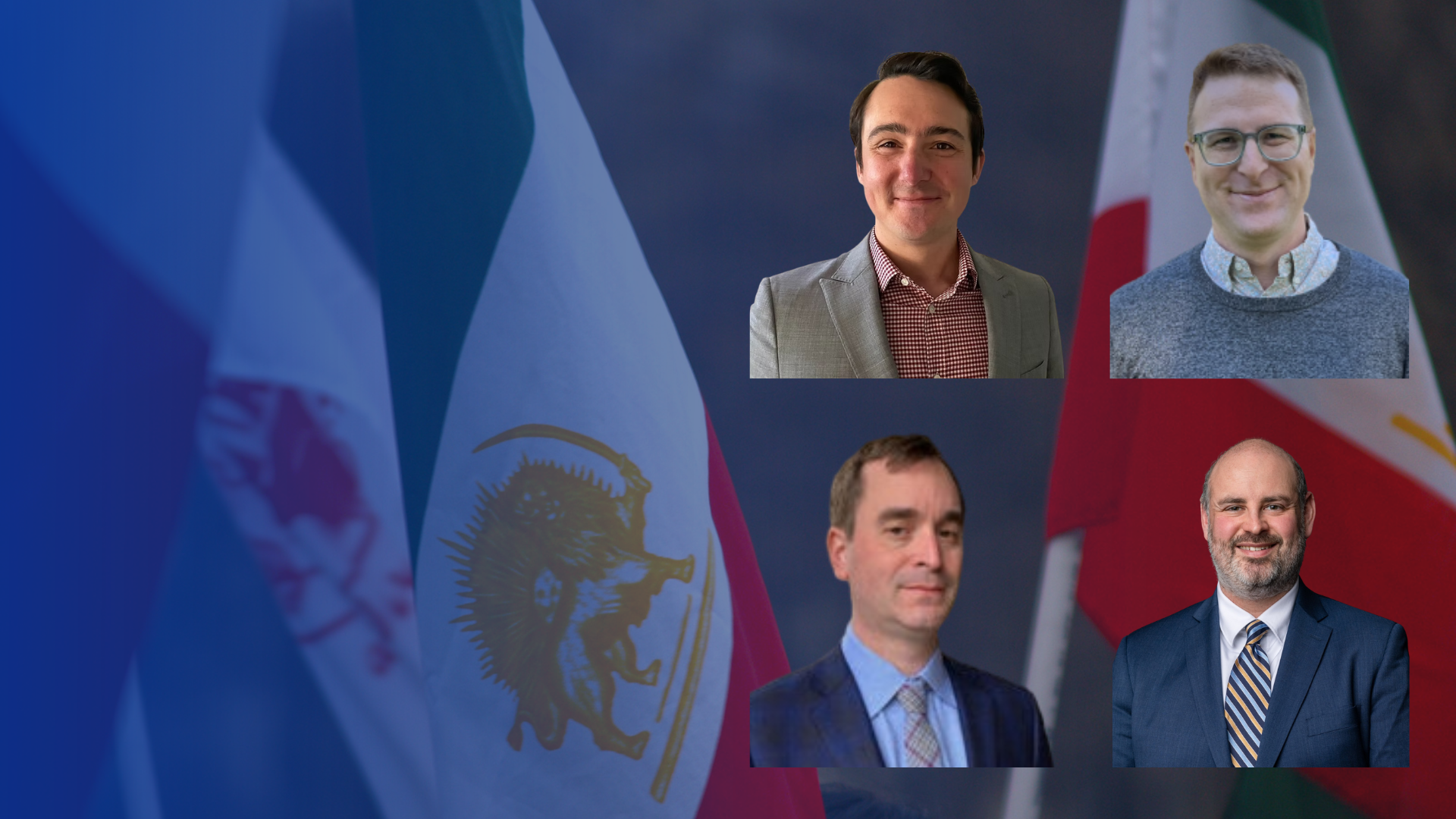
Iran is facing a period of profound uncertainty shaped by domestic unrest, economic pressures, and a rapidly escalating regional war. In recent months, widespread protests inside the country have reflected deep public frustration, while external conflict has intensified following military strikes between Iran, Israel, and the United States and retaliatory attacks across the region. The fighting has already expanded beyond national borders, drawing in regional actors and threatening global energy supplies.
Join the Alaska World Affairs Council for a timely conversation with four experts—Jonathan Panikoff, a former U.S. intelligence officer specializing in Middle East security; James Ryan, a historian of the modern Middle East; Michael Walsh, a political scientist specializing on U.S. foreign policy; and Ryan Mayfield, a researcher focused on political risk modeling—to examine how Iran’s internal dynamics intersect with this widening conflict. Join us to learn how the conflict may reshape Iran’s relationships with regional actors and global powers and what political risk analysis tells us about the possible trajectories for Iran and the wider Middle East in the months and years ahead.
This event takes place from 9:00 – 10:30 AM AKDT. Please note the time difference if you are joining from outside Alaska.
About the Speakers

Ryan Mayfield is a co-Founder and Board Member of Silo2, which is dedicated to preventing violence, reducing harm, and fostering community resilience. Silo2 deploys systems innovations to create safer, more resilient futures for all. Ryan is a researcher and practitioner who focuses on empowering people to ask for help to proactively resolve crisis situations, ranging from mental wellbeing and sexual misconduct to violence in our workplaces and schools. He additionally works at building tools to help communities and organizations with Safe Haven. He has developed data models for political risk, built military innovation programs, and studied rebel groups in the Philippines alongside members of the U.S. Army Special Forces. Ryan has previously worked in defense and national security communities as a researcher and innovator. He is a published researcher in applying artificial intelligence to sectors like helplines and behavioral threat assessment and management. Ryan grew up in Western Washington. A graduate of Stanford University, Ryan remains affiliated with the Stanford University Peace Innovation Lab. He is a member of the Association of Threat Assessment Professionals.
Jonathan Panikoff is director of the Scowcroft Middle East Security Initiative at the Atlantic Council, where he leads the organization’s work on pan-regional Middle East politics and security in addition to directing the South Asia portfolio. He is concurrently a senior fellow in the Atlantic Council’s Geoeconomics Center, focusing on foreign investment and national security issues. A former career US intelligence officer, Panikoff served from 2015 to 2020 as deputy national intelligence officer for the Near East at the National Intelligence Council, overseeing Intelligence Community analysis on the Levant and the Gulf. He later led analytic support for the 2020 US presidential transition and, in his final Intelligence Community role, served as director of the Investment Security Group, overseeing efforts related to foreign investment reviews, including matters involving the Committee on Foreign Investment in the United States and Team Telecom.He holds a JD from Syracuse University College of Law, an MA in international relations from the Maxwell School at Syracuse University, and a BA from the George Washington University. He is admitted to the New York and Connecticut bars and lives in Washington, DC, with his wife and two daughters.

James Ryan is the Executive Director of the Middle East Research and Information Project (MERIP), a non-profit publication featuring in-depth reporting and analysis of Middle East Politics and Society. Prior to joining MERIP, he served as the Director of Research and Director of the Middle East Program at the Foreign Policy Research Institute, a non-profit foreign policy think tank based in Philadelphia. He is an historian of the modern Middle East with a focus on the Ottoman Empire and Republic of Turkey, and his writing has covered political and cultural issues from the late 19th century to the present. He is currently at work on a book project investigating the history of dissent and opposition in Turkey during the interwar period in the 20th century. He received his Ph.D. in History from the University of Pennsylvania and an A.B. in Near Eastern Languages and Civilizations from the University of Chicago. He has previously served as the Associate Director of the Hagop Kevorkian Center for Near Eastern Studies at NYU, and as a Program Assistant at Penn’s Middle East Center. He is also currently serving on the board of the Ottoman and Turkish Studies Association as Executive Director.

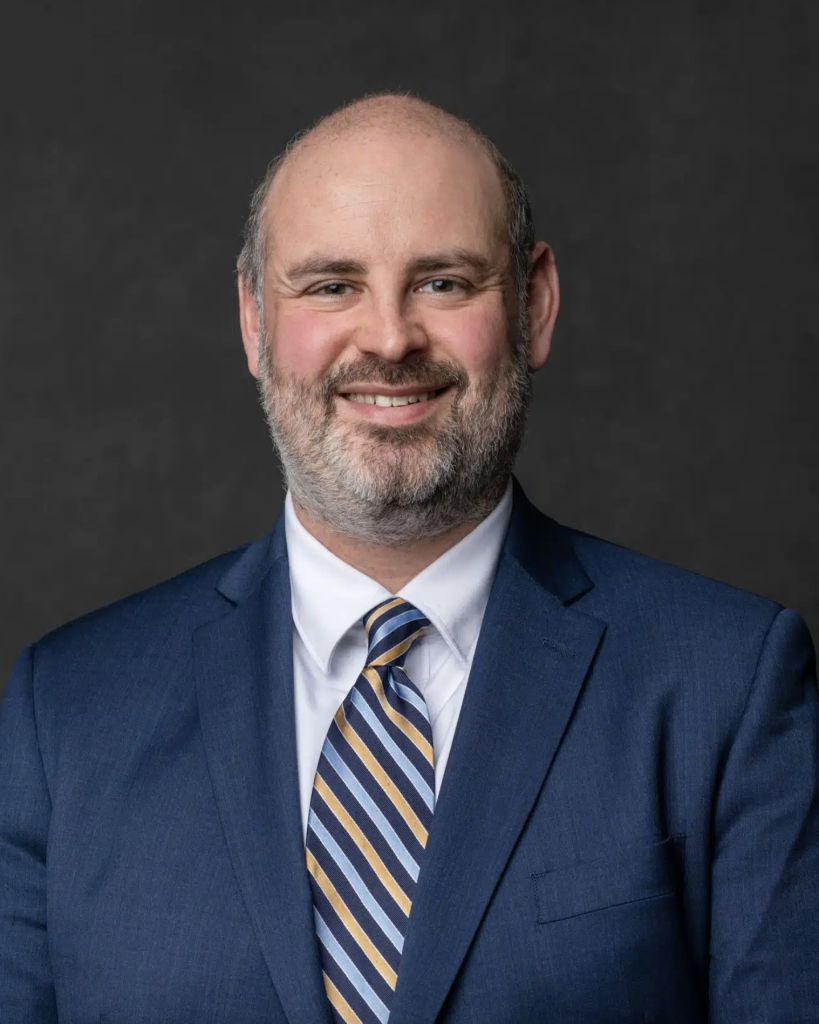
Michael Walsh is Affiliated Faculty at the University of Alaska and Visiting Researcher at the University of Lapland and Ludwig Maximilian University of Munich. He is President of Future Continuum LLC, Non-Resident Senior Fellow at the Foreign Policy Research Institute, and Occasional Lecturer at the Foreign Service Institute. His research focuses on gaps in American foreign policy, while his consulting work centers on strategic planning and data-driven decision-making for U.S. allies. He has served on expert work groups for the Partnership for Peace Consortium, U.S. Army War College, and Walter Reed Army Institute of Research, and as Lead Researcher at the Hudson Institute. His insights have been featured in major outlets including the BBC, Financial Times, NPR, New York Times, Reuters, and The Guardian.
Event Details
- This program will be held virtually on Zoom.
- The time listed is Alaska time. Please note any time difference if you are joining outside of Alaska.
- A confirmation email with the access link will be sent following registration (please check your spam folder if you don’t see the email in your inbox).
- Tickets are donation-based.